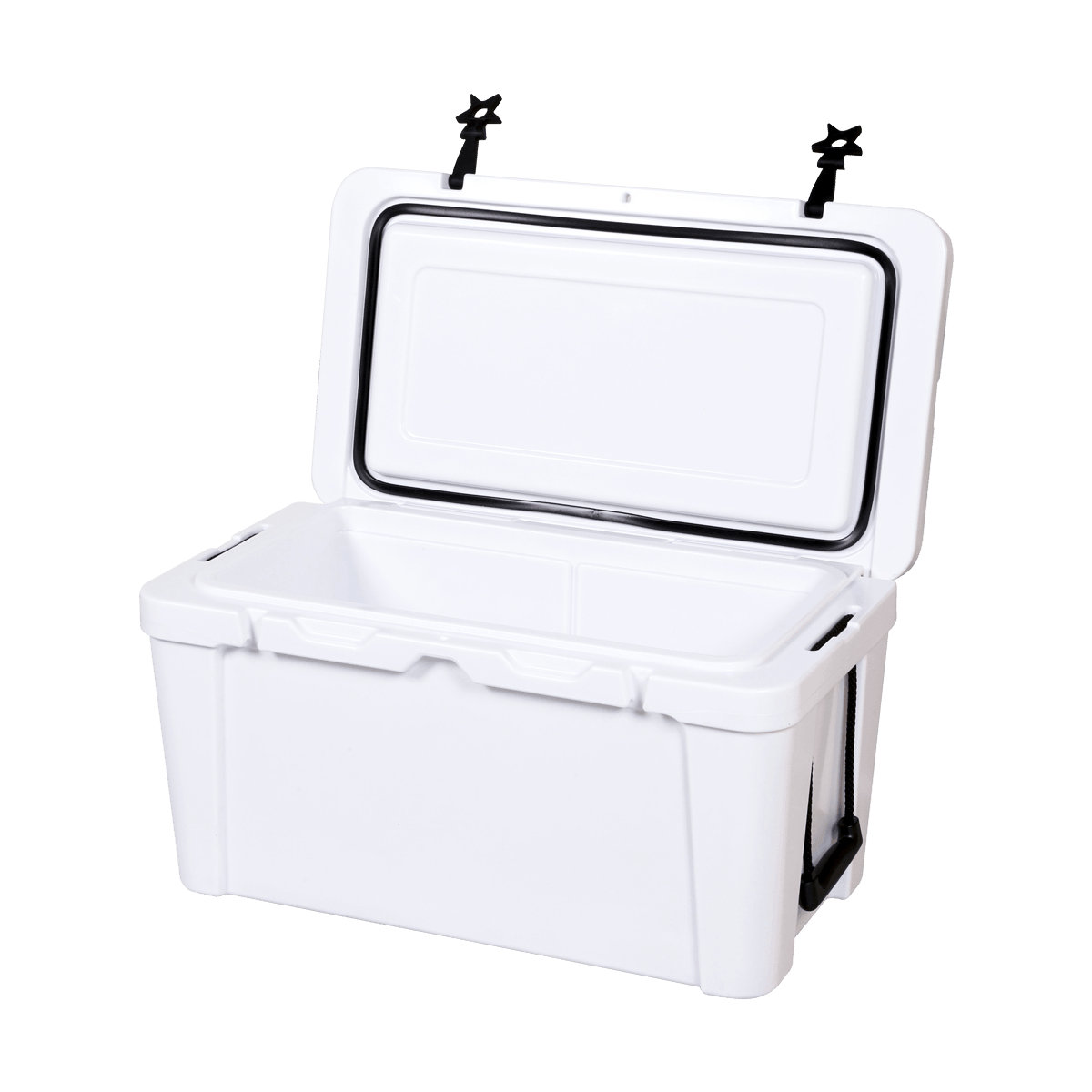
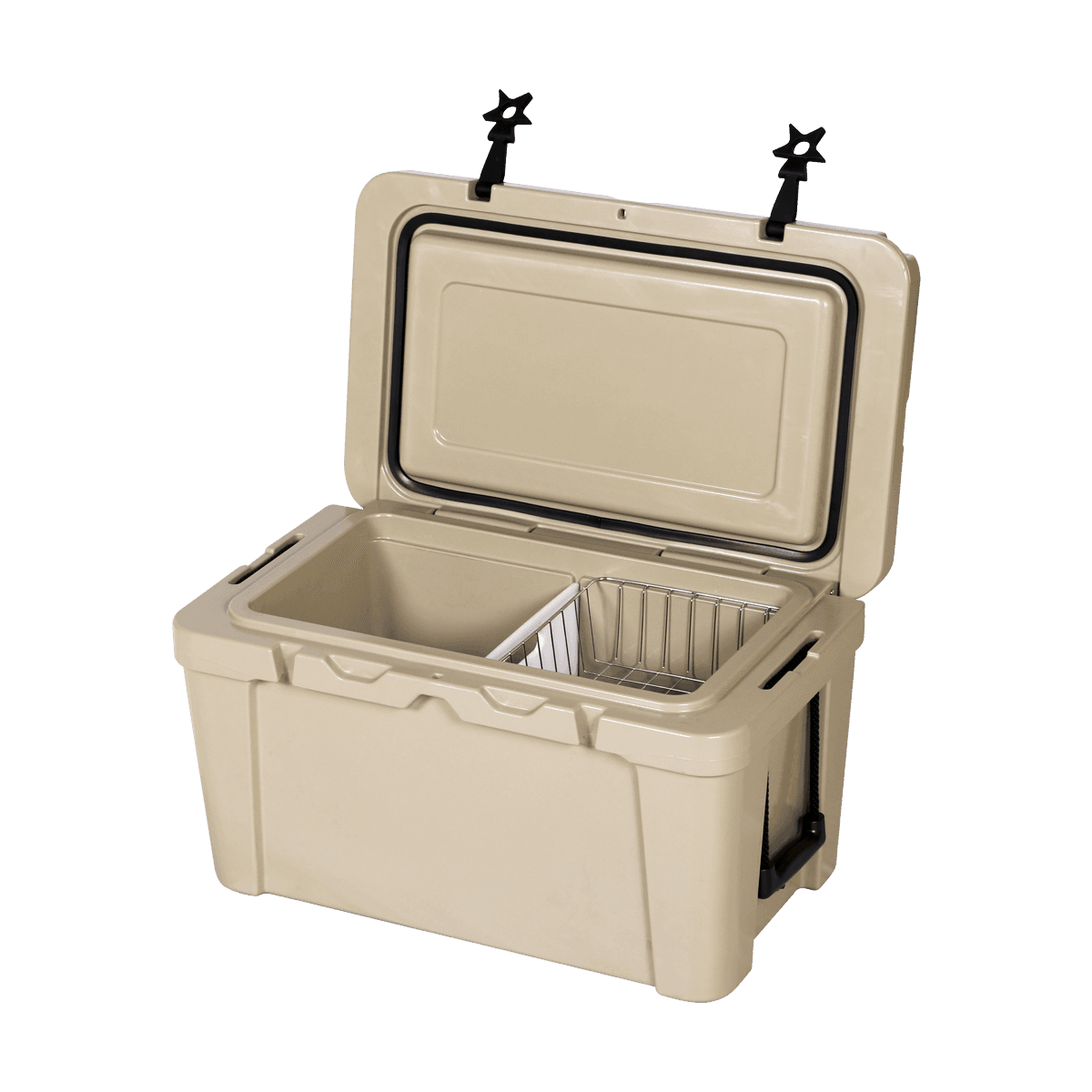
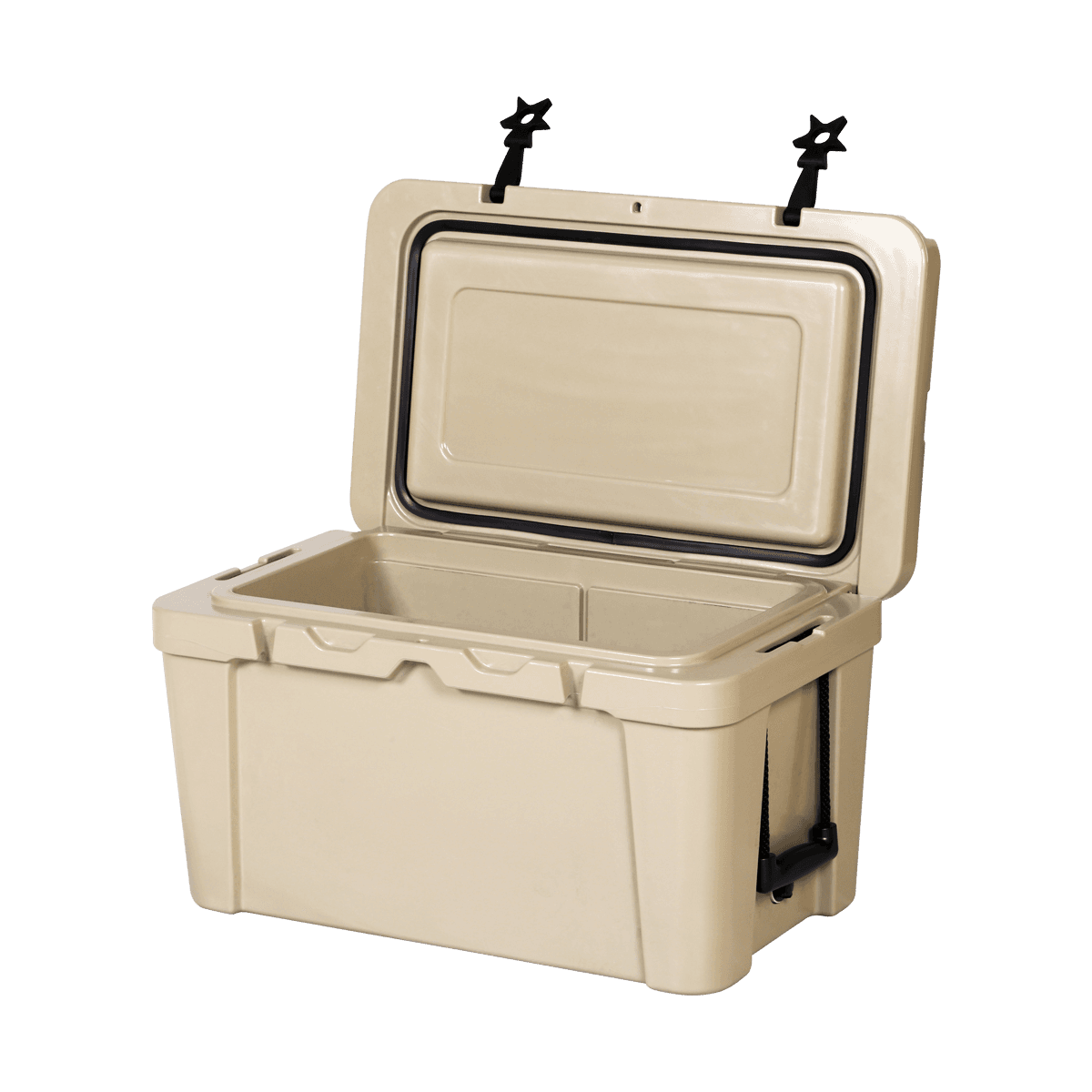
The best way to arrange food and ice inside an ice cooler container is to layer strategically from bottom to top, pre-chill everything before packing, and separate raw meat from ready-to-eat food. Most people simply dump ice and food in together and wonder why their cooler underperforms. The truth is that packing technique has as much impact on ice retention and food safety as the quality of the cooler itself. Get the arrangement right, and even a mid-range ice cooler container can keep food cold for three to five days.
This guide covers the complete science and practice of cooler packing — from choosing the right cooler size for your group to the exact layering order that maximizes both ice retention and food safety. Whether you are using a 7 quart cooler for a solo day trip or a large unit for a family camping weekend, the principles here apply across the board.
Why Packing Order Matters More Than You Think
Cold air sinks and warm air rises. This is the foundational physics behind every cooler packing decision. When you open a cooler, warm air rushes in and displaces the cold air that has accumulated near the top of the container. If your most temperature-sensitive items — raw meat, dairy, seafood — are sitting at the top of the pack, they are the first things exposed to that warm air every time the lid opens.
Additionally, ice melts from the outside in. Items touching the walls of the cooler are in contact with the insulation boundary — the area most affected by external heat. The center of the cooler stays coldest longest. Understanding these two facts — cold sinks, center stays coldest — shapes every packing recommendation in this guide.
Studies from food safety organizations including the USDA confirm that perishable foods must be kept at or below 40°F (4°C) to prevent bacterial growth. In a poorly packed cooler, temperatures in the upper layers can rise above this threshold within two to three hours of opening on a warm day — even if there is plenty of ice remaining at the bottom.
Choosing the Right Cooler Size Before You Pack
Packing strategy starts before you open the lid — it starts with selecting the right cooler size for your needs. An oversized cooler wastes ice filling empty space; an undersized one forces poor packing decisions that compromise food safety.
What Size Cooler for a Family of 4?
The most common question for group outings is what size cooler for family of 4 people going on a weekend trip. The general rule is to allow approximately 20 quarts of cooler capacity per person per day, with an additional allowance for ice volume (ice typically occupies 30–40% of usable space). For a family of four on a two-day trip, this suggests a cooler in the 65–80 quart range. For a single day outing, a 40–50 quart unit is typically sufficient.
How Big Is a 40 Quart Cooler?
How big is a 40 quart cooler in practical terms? A 40 quart cooler holds approximately 37.8 liters of total interior volume. In real-world packing terms, this translates to roughly 50–55 cans of beverage with ice, or enough food and ice for two to three people for a single day. Physically, most 40 quart coolers measure around 24–26 inches long, 14–16 inches wide, and 14–15 inches tall — compact enough to fit in the trunk of a standard sedan without difficulty.
How Big Is a 45 Quart Cooler?
How big is a 45 quart cooler? Stepping up to 45 quarts adds meaningful capacity — approximately 42.6 liters of interior volume. This size comfortably holds 60–65 cans with ice, or food and beverages for three to four people for a day trip, or two people for a two-day outing. Dimensions typically run around 26–28 inches long, 15–17 inches wide, and 15–16 inches tall. The 45 quart is a popular middle-ground size for couples and small families who want more capacity than a 40 quart without the bulk of a 50+ quart unit.
How Big Is a 50 Quart Cooler?
How big is a 50 quart cooler? At 50 quarts — approximately 47.3 liters — you are entering family-trip territory. A 50 quart cooler can hold 70–75 cans with ice, or food for four people over a full weekend. Physical dimensions are typically 28–30 inches long, 16–18 inches wide, and 15–17 inches tall. At this size, the cooler becomes heavy when fully loaded — often exceeding 50–60 lbs (22–27 kg) — so side handles and a robust lid latch become important features to evaluate.
The 7 Quart Cooler — When Small Is Right
At the opposite end of the spectrum, a 7 quart cooler is a personal-use unit designed for individual day trips, lunch breaks, or short fishing outings. Holding approximately 6.6 liters, a 7 quart cooler fits around 9–12 cans — enough for snacks and drinks for one person for a day. Its compact footprint (typically around 13–15 inches long and 9–10 inches wide) makes it easy to carry by hand and store in tight spaces. Despite its small size, packing principles still apply — even a 7 quart cooler benefits from pre-chilling and strategic layering.
| Cooler Size | Liter Equivalent | Can Capacity (with ice) | Best For |
|---|---|---|---|
| 7 Quart | ~6.6 L | 9–12 cans | Solo day trip, lunch box |
| 40 Quart | ~37.8 L | 50–55 cans | 2–3 people, 1-day outing |
| 45 Quart | ~42.6 L | 60–65 cans | 3–4 people, 1–2 day trip |
| 50 Quart | ~47.3 L | 70–75 cans | Family of 4, weekend trip |
| 65–80 Quart | ~61–75 L | 85–110 cans | Family of 4, multi-day camping |
Pre-Packing Preparation — The Step Most People Skip
The single most overlooked step in cooler packing is pre-chilling the cooler itself. A cooler stored in a warm garage or car trunk absorbs ambient heat into its walls. When you load ice into a warm cooler, the ice immediately begins compensating for the stored heat in the insulation — often losing 20–30% of its ice life before you have even left home.
How to Pre-Chill Your Cooler
- Load the cooler with sacrifice ice — a bag of cheap cubed ice — the night before your trip. Close the lid and let the cooler walls chill overnight.
- Drain the sacrifice ice the next morning and immediately reload with your actual ice and pre-chilled food.
- Alternatively, store the empty cooler in an air-conditioned room overnight — even this simple step meaningfully reduces the heat load the ice must overcome.
Pre-Chill Food and Drinks Before Packing
Never pack warm or room-temperature food directly into an ice cooler container. Warm food forces the ice to work far harder, dramatically accelerating melt rate. Pre-chill all food and beverages in your refrigerator for at least 24 hours before packing. Frozen items — meat in particular — should ideally be frozen solid before going into the cooler; they act as additional ice blocks and maintain their safe temperature for far longer than refrigerated items.
Ice Type Selection — Block, Cubed, or Dry Ice?
The type of ice you use has a significant impact on how long your cooler stays cold and how the packing arrangement should be structured.
Block Ice
Block ice is the longest-lasting option. Its lower surface-area-to-volume ratio means it melts two to four times slower than cubed ice. A quality ice block in a well-insulated cooler can last five to seven days. The downside is that it fills space less efficiently and does not surround food items as effectively as loose cubes. Best used as a base layer or primary cooling mass, supplemented with cubed ice around food items.
Cubed Ice
Cubed ice fills gaps efficiently and surrounds food items for even cooling, but melts faster than block ice. It is the most practical choice for trips of one to three days. Buy commercial bagged ice rather than home-made ice — commercial ice is made from purified water and is denser and slower to melt than ice made in standard home freezers.
Dry Ice
Dry ice (solid CO₂) sublimates at -78.5°C (-109.3°F) and can keep food frozen for significantly longer than water ice. However, it requires careful handling (insulated gloves are essential — direct skin contact causes frostbite), adequate ventilation to prevent CO₂ buildup, and must never be placed directly against food without a barrier. It is best suited to the top layer of the cooler and works best in rotomolded or high-insulation containers. Never use dry ice in a 7 quart cooler or any small enclosed container without ventilation.
| Ice Type | Approx. Duration | Best Position in Cooler | Special Handling |
|---|---|---|---|
| Block Ice | 5–7 days | Bottom layer | None required |
| Cubed Ice | 1–3 days | Around and between food | None required |
| Gel Packs | 12–24 hours | Top layer / around sensitive items | None required |
| Dry Ice | 2–3 days (sublimation) | Top layer only | Gloves required; ventilation needed |
The Correct Layering Order — Bottom to Top
The single most important aspect of packing an ice cooler container is the order in which you layer food and ice. Here is the proven sequence that maximizes both ice retention and food safety:
Layer 1 — Bottom Ice Bed
Start with a 2–3 inch base layer of ice — block ice if available, supplemented with cubed ice to fill gaps. This layer serves as the primary cold reservoir and ensures that even the lowest items in the cooler are surrounded by cold, not resting on warm plastic. For trips longer than two days, a full block of ice as the base is strongly recommended.
Layer 2 — Raw Meat and Seafood (Frozen and Sealed)
Raw meat and seafood go directly on top of the bottom ice layer, at the very bottom of the food stack. There are two reasons for this: first, cold air sinks, so the bottom of the cooler stays coldest; second, keeping raw meat at the bottom prevents any potential drip contamination from reaching the food above. All raw meat should be in double-sealed, leak-proof bags or containers — never trust the original store packaging alone.
Ideally, raw meat should be frozen solid before loading. A frozen steak or chicken breast is essentially a supplementary ice block — it will remain safe for far longer than refrigerated meat and will help keep surrounding items cold as it gradually thaws.
Layer 3 — Dense, Cold-Dependent Foods
Above the meat layer, pack dense items that require consistent cold but are fully sealed and less contamination-sensitive: hard cheeses, whole eggs in a hard container, marinated vegetables, sealed deli meats, and cold cuts. Pack these tightly to minimize air gaps — air is the enemy of ice retention, as air spaces allow warm convection currents to form inside the cooler.
Layer 4 — Ice Fill Around Food Items
After placing your dense food items, fill all gaps with cubed ice. Every air gap is a potential warm pocket. Push ice into the spaces between containers, around bottles, and along the sides. The goal is a completely ice-filled interior with no significant air space between food items.
Layer 5 — Ready-to-Eat Foods and Snacks
The middle-to-upper section of the cooler is for ready-to-eat items: pre-made sandwiches, fruit, vegetables, hummus, yogurt, and snacks. These items are accessed frequently and benefit from being within easy reach without requiring you to dig through the entire cooler. Keep them in waterproof containers or sealed bags to protect against meltwater.
Layer 6 — Beverages
Beverages are the most frequently accessed items and each opening exposes the cooler to warm air. For this reason, many experienced campers and outdoor enthusiasts recommend keeping beverages in a separate, dedicated cooler — freeing the food cooler from frequent opening and dramatically improving ice retention. If using a single cooler, place beverages in the upper section for easy access, and accept that this layer will experience the most temperature fluctuation.
Layer 7 — Top Ice Layer and Insulating Cover
Finish with a final layer of ice or gel packs across the top, then cover with a layer of newspaper, a folded towel, or a purpose-made cooler divider. This insulating top layer creates a buffer zone between the food and the warm air that enters every time the lid is opened. It is a simple addition that meaningfully extends the cold life of the entire load.
The Ice-to-Food Ratio — Getting the Balance Right
One of the most common packing mistakes is using too little ice. The recommended ice-to-food ratio for most ice cooler containers is 2:1 by volume — meaning for every one unit of food, you should have two units of ice. In practice, this means ice should occupy at least 60–65% of the cooler's interior space.
This seems like a lot, but consider the context: every time you open the lid, add warm items, or allow the cooler to sit in direct sun, you are drawing down that ice reserve. Starting with more ice than you think you need is almost always the right call, especially for trips of two days or more.
For a 45 quart cooler on a three-day family camping trip, this means packing approximately 25–30 quarts of ice alongside roughly 15–20 quarts of food. For a 7 quart cooler on a day trip, even 4–5 quarts of ice alongside minimal food is appropriate to maintain temperature through a full day.
Food Safety Zones Inside an Ice Cooler Container
Understanding food safety zones helps you decide not just where to place food, but how to manage the cooler throughout the trip. The three zones are:
- Freeze zone (below 32°F / 0°C): Directly adjacent to ice blocks; ideal for raw meat, seafood, and items that benefit from near-freezing temperatures
- Refrigerator zone (32–40°F / 0–4°C): The main body of the cooler away from direct ice contact; suitable for dairy, cooked foods, eggs, and produce
- Danger zone (above 40°F / 4°C): The top of the cooler after repeated opening; no perishable food should remain in this zone for more than two hours cumulatively
Use a simple waterproof thermometer inside the cooler to monitor temperature throughout the trip. Inexpensive digital models are widely available and remove all guesswork about whether your food is being maintained at a safe temperature.
Should You Drain Meltwater or Leave It?
This is a topic of genuine debate among experienced campers, and the answer depends on what you are storing.
Leave the meltwater if: You are primarily cooling beverages or sealed containers. Meltwater at 32–35°F (0–2°C) is actually an excellent cooling medium — it surrounds containers more completely than ice alone and helps stabilize temperature. Draining it removes a valuable cold reservoir.
Drain the meltwater if: You have food items that could be compromised by water contact — bread, crackers, unwrapped cheese, or any item in packaging that is not fully waterproof. In this case, drain regularly and keep susceptible items elevated in waterproof containers above the waterline.
Never drain and refill with warm water to "clean" the cooler mid-trip. The slight inconvenience of meltwater is far preferable to the rapid temperature spike caused by introducing warm rinse water.
Placement and External Conditions — Where You Put the Cooler Matters
Even the most perfectly packed ice cooler container will underperform if placed incorrectly. External heat load is the primary driver of ice melt, and small adjustments in cooler placement can add 12–24 hours of ice life on a multi-day trip.
- Keep the cooler in shade at all times. Direct sunlight on a dark-colored cooler can raise surface temperature by 20–30°F, dramatically accelerating ice melt. In a campsite, position the cooler under a tarp, tree cover, or vehicle shadow.
- Elevate the cooler off hot ground. Asphalt, sand, and bare rock absorb enormous heat in sunlight and transfer it through the cooler's base. Place the cooler on a camp chair, a wooden board, or a folded blanket.
- Wrap or cover the cooler. A reflective emergency blanket or a dedicated cooler cover draped over the outside reflects solar radiation and can reduce external heat load by 30–40%.
- Do not store the cooler in a closed car trunk in summer. Interior car temperatures can exceed 140°F (60°C) on hot days — an almost impossible heat load for any cooler to overcome. If transporting, keep the cooler in the air-conditioned passenger area.
- Minimize lid openings. Every opening is an exchange of cold interior air for warm exterior air. Plan your access — know what you need before opening the lid, retrieve it quickly, and close immediately. Each unnecessary opening costs measurable ice life.
A Note on Evaporative Coolers vs. Ice Cooler Containers
A question that comes up in outdoor and home cooling contexts is what size evaporative cooler do I need — and it is worth clarifying that evaporative coolers (swamp coolers) are fundamentally different devices from ice cooler containers. Evaporative coolers use water evaporation to lower air temperature in a room or space; they are not designed for food storage. The question of what size evaporative cooler do I need is answered by the square footage of the room being cooled — typically calculated at 2 CFM (cubic feet per minute) of airflow per square foot of room area — rather than by food volume or trip duration.
If you are specifically looking to cool food and beverages for outdoor use, an ice cooler container is the correct tool. If you are looking to cool a living space or tent, an evaporative cooler is a separate product category with its own sizing considerations.
Common Packing Mistakes and How to Avoid Them
- Packing warm food directly from the counter: Room-temperature food introduces significant heat into the cooler and causes rapid ice melt. Always pre-chill in a refrigerator for at least 24 hours before packing.
- Using too little ice: Aim for a minimum 2:1 ice-to-food ratio. More ice is almost never a mistake — too little ice always is.
- Placing raw meat on top: Cross-contamination risk is real. Raw meat always goes on the bottom, fully sealed, below all ready-to-eat items.
- Leaving large air gaps: Air pockets warm quickly and accelerate ice melt. Fill every gap with ice, rolled towels, or crumpled newspaper.
- Opening the cooler too frequently: Each opening costs ice life. Use a separate beverage cooler to reduce access frequency to the food cooler.
- Not pre-chilling the cooler: A warm cooler wastes up to 30% of your ice before the trip begins. Always sacrifice-ice the night before.
- Choosing the wrong cooler size: An oversized cooler requires more ice to maintain temperature; an undersized one forces poor packing. Match cooler size to your actual group size and trip duration using the guidelines above.
Final Takeaway
The best way to arrange food and ice inside an ice cooler container combines correct layering, adequate ice volume, pre-chilling of both the cooler and food, smart placement, and disciplined lid management. Start with the right cooler size for your group — whether that is a compact 7 quart cooler for a solo day trip, a versatile 40 or 45 quart cooler for a small group, or a 50 quart cooler for a full family weekend — then apply the layering principles consistently. Raw meat sealed and frozen at the bottom, dense foods in the middle, ready-to-eat items near the top, and ice filling every gap. Keep the cooler shaded, minimize openings, and monitor temperature with an inexpensive thermometer. Follow these steps and your ice cooler container will reliably keep food safe and ice frozen far longer than most people expect.
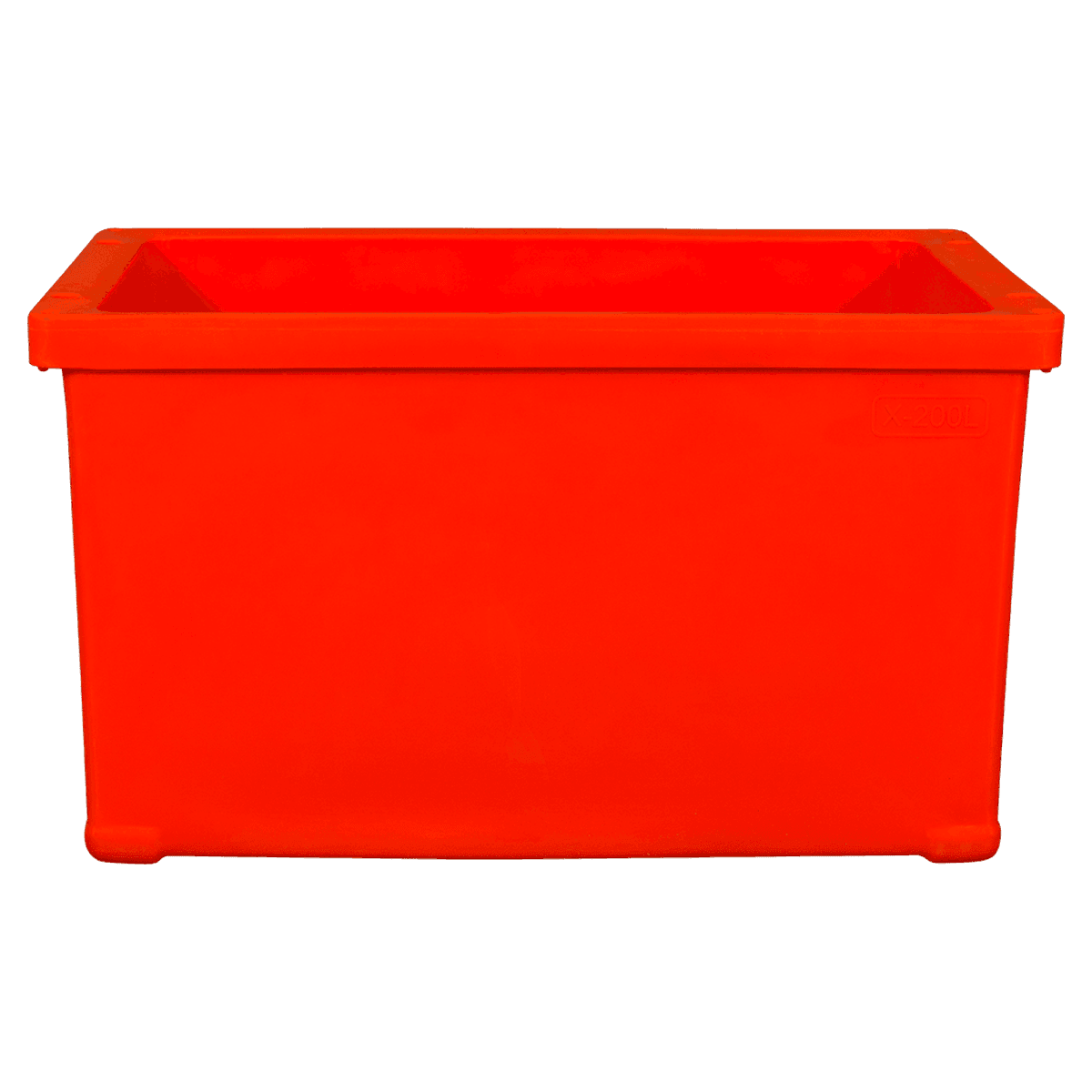
-4.png "Caixa de resfriador de gelo de lixeira com lixo de peixe X-12-120L")
-4.png "Caixa de refrigerador de gelo de pesca isolada X-70L")
-2.png "Caixa mais fria de gelo X-68L para manter a comida fria e fresca")
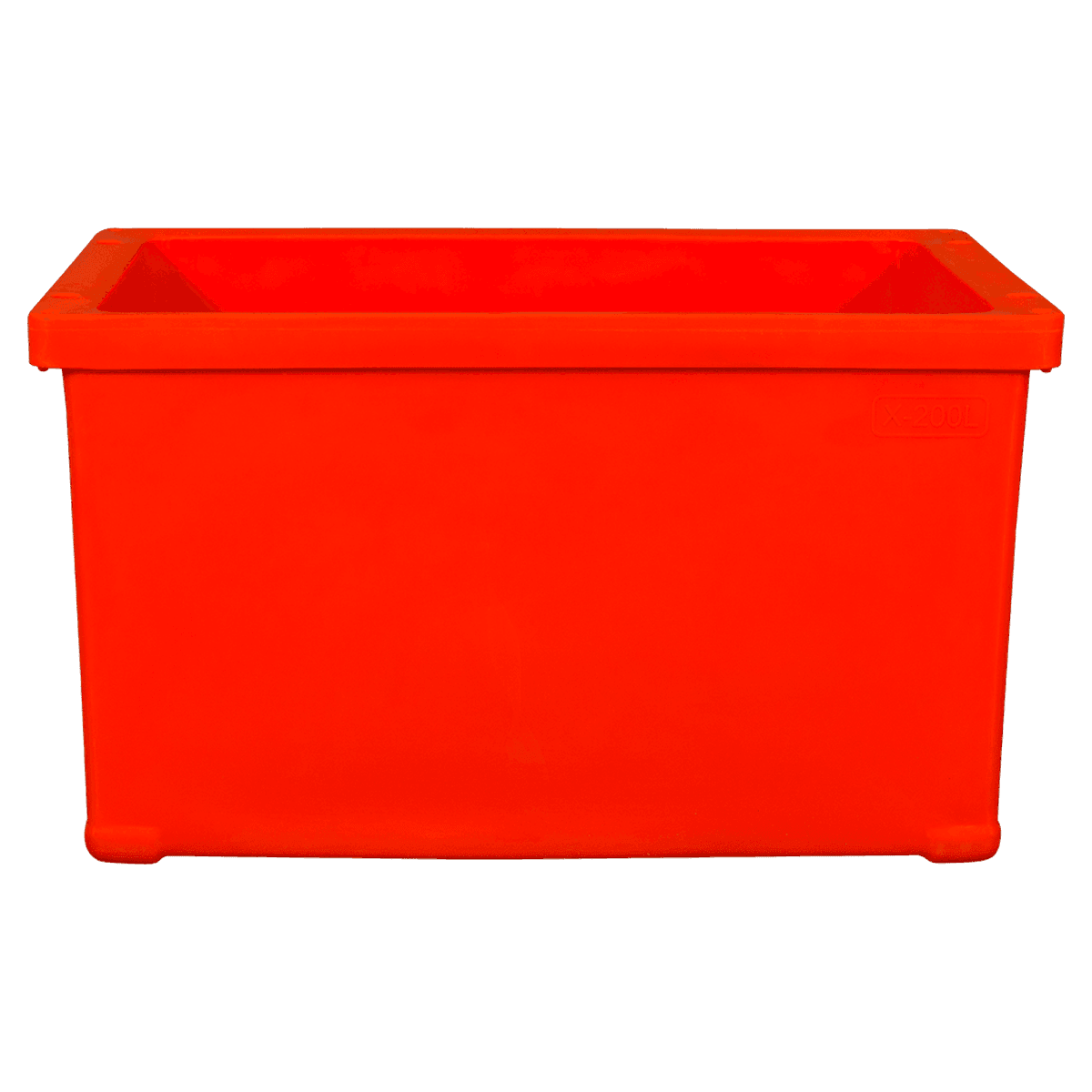
-2.png "Tanques de transporte de frutos do mar ao vivo X-120L")
-2.png "Tanques de transporte de frutos do mar ao vivo X-70L")